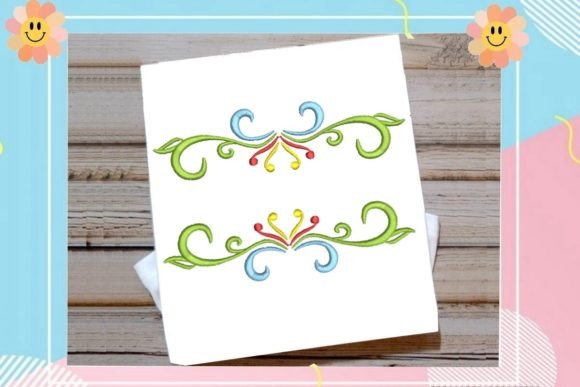
Reviewing Beautiful Border Multicolor for Real Projects
As a designer who spends more time staring at stitch previews than I care to admit, I have learned that not every machine embroidery design looks as good on fabric as it does on a screen. When I first opened the file for Beautiful Border Multicolor, my initial reaction was one of cautious optimism. The preview showed a vibrant, flowing arrangement of colors that promised elegance, but in our line of work, vibrancy can sometimes translate to thread breaks or messy backs if the digitizing isn’t up to par. I decided to put this embroidery asset through its paces to see if it holds up in a real-world embroidery project.
First Impressions and Visual Personality
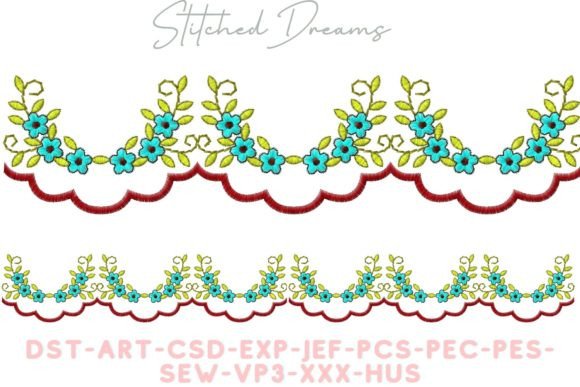
The immediate mood created by Beautiful Border Multicolor is cheerful yet refined. It does not scream for attention with aggressive shapes; instead, it exudes an air of charm that feels organic. The layout suggests a natural flow, making it ideal for framing elements rather than standing alone as a chaotic centerpiece. For those of us creating design assets for clients, this versatility is crucial. It feels like a design that belongs on soft, high-quality textiles rather than stiff, industrial materials.
The color palette in the digital preview is rich, but as any experienced Etsy seller knows, screen colors rarely match thread spools exactly. The transition between hues in this border appears smooth, suggesting careful planning in the thread colors selection. This is vital for maintaining a professional look in your finished product. If the gradients are too abrupt, the design can look pixelated or cheap once stitched out.
Real-World Application: The Tote Bag Test
To truly evaluate this piece, I imagined a specific scenario: a custom order for a boutique client needing branded tote bag design elements. The client wanted something that felt handmade but polished. I visualized placing Beautiful Border Multicolor along the bottom hem of a heavy canvas tote. In this context, the border acts as a grounding element, adding weight and visual interest to an otherwise plain surface.
However, the success of this application depends heavily on the stitch density. A border with too many overlapping layers can cause puckering on canvas if not properly stabilized. Conversely, if the density is too low, the fabric might show through, ruining the vibrant effect. For a small shop product like this, consistency is key. You cannot afford to have one bag look lush and another look sparse. This is why I always recommend running a test stitch on scrap fabric that matches your final material before committing to the full production run.
Versatility Across Product Lines
Beyond tote bags, this design shows promise for various other applications. For sweatshirt embroidery, the border could frame a monogram on the chest or sleeve, adding a touch of sophistication to casual wear. The multicolor aspect helps it stand out against solid-colored fleece, provided you choose contrasting thread shades. For baby embroidery projects, such as blanket edges or nursery decor, the gentle curves and charming aesthetic fit perfectly. Just ensure the threads used are safe and durable for items that will be washed frequently.
I also considered its use in holiday embroidery. With slight adjustments to the thread palette—swapping in reds, greens, or golds—this border could easily become a festive accent for kitchen towels or pillow covers. This adaptability makes it a valuable addition to any craft business library, allowing you to repurpose one digital embroidery file across multiple seasonal collections.
Technical Considerations and Potential Pitfalls
While Beautiful Border Multicolor is visually appealing, there are areas where caution is necessary. One major concern with multicolor borders is the number of stops and starts. Each color change requires the machine to pause, which increases production time and the risk of user error. If you are running a high-volume commercial embroidery operation, calculate whether the extra labor cost is justified by the retail price of the item.
Fabric choice is another critical factor. On thin or stretchy fabrics, such as jersey knits for t-shirts, a dense border can cause distortion. Using the right stabilizer is non-negotiable here. A cut-away stabilizer might be necessary for stretchy garments to maintain the shape of the border after washing. On textured fabrics, like linen or waffle weave, finer details might get lost. In such cases, simplifying the thread palette or increasing the scale of the design might help maintain clarity.
Curved surfaces present another challenge. Applying this border to a cap or hat requires careful hooping and possibly resizing to fit the curvature without warping. The corners of the design, if any exist in the specific variant you choose, need to be inspected for potential thread bunching. Sharp turns in satin stitch or complex fill stitch areas can lead to breaks if the needle size or thread tension is not optimized.
Enhancing Brand Value and Customer Trust
From a business perspective, the quality of your embroidery directly impacts customer trust. A clean, well-stitched border signals professionalism. It tells the buyer that you care about the details. When customers receive a personalized gift or a piece of custom apparel that looks pristine, they are more likely to leave positive reviews and return for future purchases. Beautiful Border Multicolor, when executed correctly, contributes to this perception of quality.
For printable mockup creation, this design offers great visual appeal. It photographs well, which is essential for online listings. However, ensure that your mockups accurately represent the texture and sheen of the actual threads. Misleading images can lead to disappointed customers and returns. Always compare your digital proofs with physical samples to ensure your marketing materials are honest and accurate.
Practical Designer Notes
- Test on Scrap Fabric: Always stitch a sample on the exact fabric type you plan to use. Check for puckering, thread breaks, and color accuracy.
- Check Stitch Density: Review the design in your software to identify overly dense areas that might need editing or lighter thread weights.
- Confirm Hoop Size: Ensure the design fits within your machine’s hoop dimensions without requiring excessive re-hooping, which can misalign patterns.
- Inspect Small Details: Zoom in on the digital file to check for tiny, unnecessary stitches that might cause jams or look messy.
- Contrast Matters: Test the design on both light and dark fabrics. You may need to adjust thread colors or add an underlay to ensure visibility on darker materials.
- Licensing Verification: Before selling items made with this embroidery file, confirm the license terms. Some designers allow commercial use for finished goods but restrict the resale of the digital file itself.
In conclusion, Beautiful Border Multicolor is a strong contender for designers looking to add a touch of elegance to their Borders collection. It requires thoughtful execution regarding stabilizer choice, thread selection, and fabric compatibility. But for the handmade product creator willing to put in the prep work, it offers a versatile and charming element that can elevate everything from a simple embroidered patch to a high-end boutique garment. Treat it with the technical respect it deserves, and it will serve your craft business well.