Camper Key Fob: A Designer’s Practical Review
As an embroidery designer who spends half my life digitizing and the other half stitching out test runs, I have learned that not every machine embroidery design is created equal. Some are flashy but fragile; others are simple yet incredibly durable. When I first loaded the Camper Key Fob file into my software, I was looking for more than just a cute graphic. I wanted to know if this design could hold up in a real-world commercial environment. Could it survive the daily abuse of keys jingling in a pocket? Would it look professional enough for an Etsy seller to charge a premium price? After putting it through its paces on various fabrics and hoops, here is my honest assessment of how this design performs in actual production.
First Impressions: Mood and Visual Personality
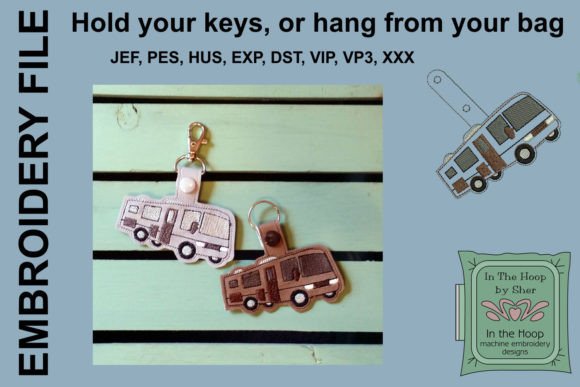
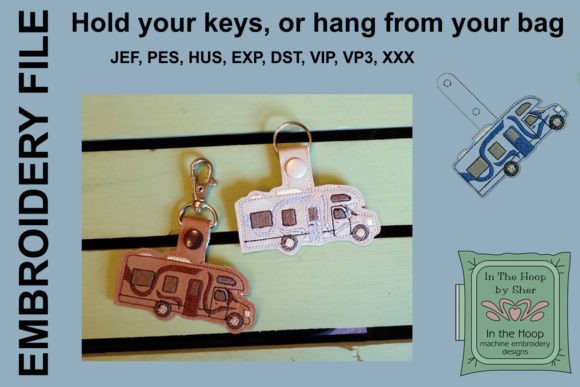
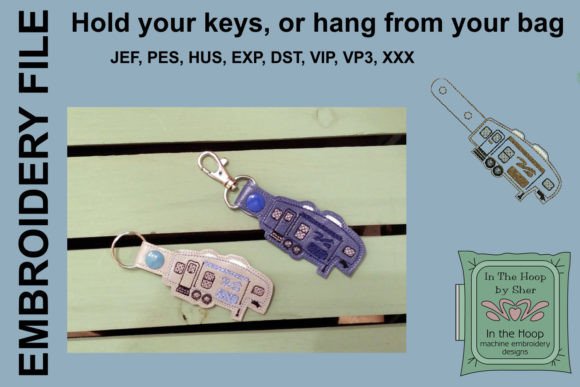
The immediate appeal of the Camper Key Fob lies in its nostalgic charm. It captures the essence of Camping culture without relying on clichéd or overly complex imagery. The layout is compact, which is essential for a key fob application, yet it retains enough detail to be recognizable from a distance. The visual personality is warm and inviting, suggesting adventure and relaxation. For a designer, this is a crucial starting point. If the motif doesn’t evoke an emotional response, the finished product becomes just another commodity. This design feels like a story waiting to be told, making it an excellent candidate for personalized gifts or boutique merchandise.
What stands out initially is the balance between negative space and stitch coverage. Many amateur designs suffer from either too much density, causing puckering, or too little definition, resulting in a muddy appearance. The Camper Key Fob strikes a thoughtful middle ground. It uses clean lines and distinct shapes that translate well into thread, ensuring that the final embroidery project looks crisp rather than cluttered.
Real-World Application: Beyond the Key Ring
While the primary intent is obviously a key fob, my testing revealed that this design has surprising versatility. I started by stitching it onto heavy canvas for a traditional leather-and-fabric fob. The result was sturdy and professional. However, I also tested it on a small tote bag design prototype. Placed in the corner of a canvas shopper, it acted as a subtle brand accent rather than a loud statement. This adaptability is gold for small shop product lines where you want to maximize the utility of a single digital embroidery file.
I also experimented with sweatshirt embroidery on a child’s size 4T hoodie. Positioned on the cuff or near the hem, the camper motif added a playful touch suitable for baby embroidery projects. Parents love themes that suggest family bonding, and this design fits that narrative perfectly. For holiday embroidery collections, such as Father’s Day or summer vacation bundles, this asset serves as a strong anchor piece. It pairs well with text elements, allowing crafters to add names or dates without overwhelming the central graphic.
For those running a craft business, consistency is key. This design maintains its integrity across different applications. Whether used as an embroidered patch ironed onto a denim jacket or stitched directly onto a custom apparel item, the visual weight remains balanced. This reliability helps build brand consistency, ensuring that customers recognize your quality regardless of the product type.
Technical Performance and Stitch Quality
Let’s talk about the nuts and bolts of the stitching. The design utilizes a mix of satin stitch borders and fill stitch areas. In my tests, the satin columns were tight and uniform, providing a nice raised texture that adds tactile value to the finished product. The fill areas were not overly dense, which is critical for preventing fabric distortion. When working with smaller items like key fobs, every millimeter counts. High density can make the fabric stiff and unyielding, which is undesirable for a flexible accessory.
I paid close attention to the stitch density in the finer details. There were no excessive jump stitches or messy trim points visible on the back, which suggests the digitizer understood the importance of clean finishing. For commercial embroidery shops running multiple units, this efficiency translates to less time spent trimming threads and higher throughput. The use of running stitch for underlay or fine detailing helped anchor the design without adding bulk, a technique that experienced embroiderers will appreciate.
However, no design is perfect for every scenario. I noticed that on very textured fabrics, such as terry cloth towels, some of the finer lines lost definition. This is not necessarily a flaw in the embroidery file itself but a reminder that fabric choice matters. For best results, stick to smoother surfaces like cotton twill, canvas, or felt. If you must use textured material, consider increasing the stitch count slightly or using a heavier thread weight to ensure visibility.
Navigating Challenges: Hoop Size and Fabric Constraints
One of the most common pitfalls in small-item embroidery is hoop selection. The Camper Key Fob is designed for compact spaces, but you must ensure your hoop size matches the design dimensions exactly. I recommend using a magnetic hoop or a specialized key fob jig if available. These tools keep the fabric taut and prevent shifting, which is crucial for maintaining alignment in such a small area. If you are new to this, always test the design on scrap fabric first. This allows you to check tension and registration without risking expensive materials.
Fabric stability is another concern. Thin or stretchy fabrics can cause the design to pucker or distort. Always use an appropriate stabilizer. For woven fabrics, a cut-away stabilizer provides long-term durability, while tear-away might suffice for temporary projects. For knit fabrics, consider using a fusible backing to prevent stretching during the stitching process. Dark fabrics present their own challenge regarding thread colors. Ensure you have high-contrast threads selected so the design pops. A low-contrast combination on navy or black fabric can render the details invisible.
Curved surfaces, such as caps, require extra care. While this design could work on a hat bill or side panel, the curvature can distort the perspective. I advise creating a printable mockup to visualize how the flat design will wrap around the curve. Adjusting the placement slightly higher or lower can sometimes mitigate distortion effects.
Commercial Viability and Brand Value
From a business perspective, the Camper Key Fob offers strong potential for upselling. It is an ideal add-on item for customers purchasing larger camping gear or personalized apparel. Its small size means low material cost, yet the perceived value of custom embroidery allows for a healthy margin. For digital product sellers, offering this as part of a bundle with other outdoor-themed assets can increase average order value.
Customer trust is built on quality. A cleanly stitched, well-designed fob signals professionalism. It shows that you care about the details, which encourages repeat business. When customers receive a personalized gift that looks polished and durable, they are more likely to leave positive reviews and recommend your shop to others. This design supports that goal by being inherently robust and visually appealing.
Final Designer Notes and Recommendations
Before launching this design into your production line, take these practical steps. First, verify the specific file formats included in the package to ensure compatibility with your machine. The description mentions multiple embroidery files, but always double-check that your specific model is supported. Second, review the license terms. If you plan to sell finished items, confirm that commercial use is permitted. Most designers allow this, but it is vital to be certain.
Test the design in both color and monochrome. Sometimes, a design relies too heavily on color differentiation. Seeing it in black and white helps you understand if the shapes stand on their own. Finally, consider your target audience. Are they rugged outdoorsmen or glamping enthusiasts? Tailor your thread color palette and fabric choices to match their aesthetic. By treating the Camper Key Fob not just as a file, but as a component of a larger brand experience, you can maximize its impact and profitability.
In conclusion, this is a solid, versatile addition to any embroiderer’s library. It balances aesthetic charm with technical practicality, making it suitable for both hobbyists and serious creative entrepreneurs. With careful attention to stabilizer choice and hoop management, it will produce high-quality results that enhance your product offerings.